Analysing past behaviours, mapping trends, then drawing conclusions about future states or directions can often be an inexact science. Whatever past data tells us, what comes next is subject to such levels of fluctuation as to be sometimes deeply embarrassing.
But as the publishing sector becomes more data-driven and analytics based, there are certain things that we can begin to have more faith in. And when the data maps to wider societal trends that we’re observing, there can be productive synergies predicted, created and responded to.
Sustainability, reuse and the backlist
In a climate in which sustainability and reuse is a key theme, not just from an environmental impact, what can we start to discern from the current headwinds to define the future of creative content in evidence-based ways? For publishers, reuse has a particular resonance. A backlist represents years of editorial and creative investment, and finding ways to give those books a longer life is as much a commercial question as a creative one.
Personalised audio should be a current focus for the publishing sector keen to harness technology to define and shape the future of audiobooks. There is scepticism in some quarters. But handled carefully, personalised audio, such as the creation of bespoke audiobooks and personalised snapshots, could represent a profitable new strand of income for publishing houses.
When the narrator is someone you know
But I wonder whether there’s something that goes further, which we can predict from the data patterns that audio and audiobook usage start to give us. Are there ways in which we can support readers to get better use and reuse from their existing assets to deepen and widen connection to their communities and loved ones?
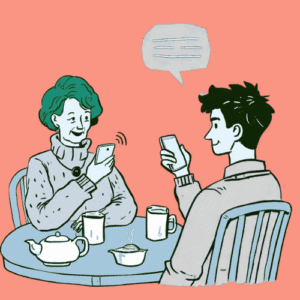
Consider what happens when the narrator of a book isn’t a professional voice actor but someone the listener knows. A parent working away from home, a grandparent in another country, an older sister who has left for university. The text is the same carefully edited book it always was; what changes is the listener’s relationship with it. The book becomes a point of contact between people rather than a product consumed by one of them.
That’s a different kind of reuse: not repackaging content for a new market, but letting an existing work carry something personal from one person to another.
It is also a model that keeps the author and content at its centre. The words on the page are not rewritten or remixed; they are simply given a new voice. That matters in a sector where many are understandably wary of technology that appears to bypass the people who create the work. At Dudley Editions we work closely with every author and publisher whose books we make available on the platform, and we see personalised narration as a way of extending a book’s reach.
What listening data can tell us
We know that many people respond better to learning objects and resources delivered via audio. Through simple tracking of how people use audio resources (the points at which they pause, the times when they disengage with material, places where they loop back to relisten) we can define how future iterations better meet their needs.
Those patterns also reveal something about return. A recording that means something to someone is unlikely to be heard only once. A story read by a person we love tends to be played again, at bedtime, on a long journey, or on an evening when that person feels far away. For publishers and authors, this points to a different measure of value; rather than asking only how many copies a title sells, we might ask how often it is returned to, and how often it is shared. Those are questions the data can increasingly help us answer.
There’s a further step to be taken in redefining audio experiences to allow people to access the most meaningful content to them. Formatting can be helpful in this regard, but the types of voices we choose for our audiobooks can also be extremely powerful. There’s research suggesting that hearing the voice of someone we trust can lower markers of stress and strengthen feelings of closeness. With this in mind, the choice of narrator is far from cosmetic. It may be the most significant editorial decision in the whole audio experience, and one that will help shape the future of audiobooks.
The future of audiobooks: format or relationship?
How this comes together to form a coherent future for creative content is less clear. We know that all projections suggest that digital content is big business, but defining the limits and edges of that content, far less the method by which it will be generated, is complex.
It seems a safe bet to say that the tools and methods for creative content will be more numerous and diverse, but it’s always hard to predict if one method will emerge to become the dominant medium or whether a fragmented market will present an accessible creative marketplace in which customers and readers, as well as content creators, can thrive. Our instinct here at Dudley Editions is that the answer lies less in format than in relationship. The future of audiobooks will be shaped by what people value enough to keep and want to share, and personalisation gives them a reason to share a story and to return to it.